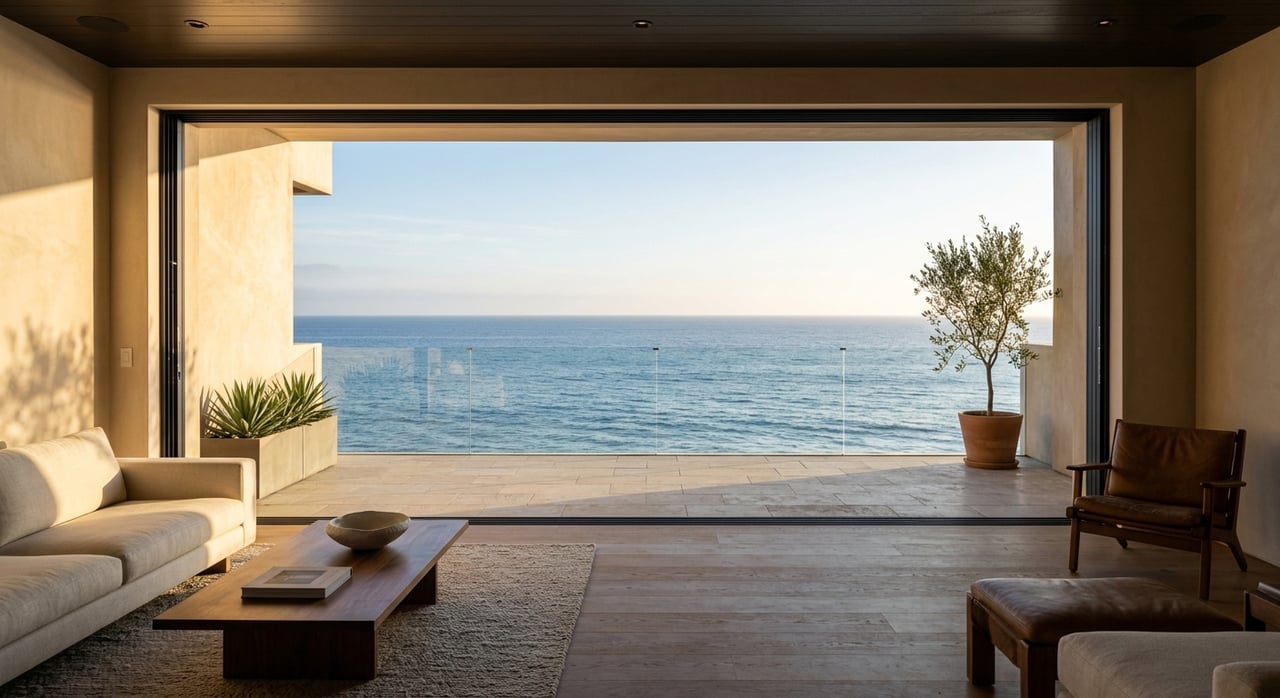
If you are deciding between a beachfront home and a Village home in Del Mar, you are really choosing between two very different ways to live in one of San Diego County’s most limited markets. That can feel exciting, but it can also be hard to sort through the tradeoffs when prices, access, regulations, and daily lifestyle all shift by micro-location. This guide will help you compare the two clearly so you can match your purchase to how you actually want to live, use, and hold the property over time. Let’s dive in.
Why micro-location matters in Del Mar
Del Mar is the smallest incorporated jurisdiction in San Diego County by land area, population, and housing units, and the city describes itself as a built-out community with limited land for new growth. In a market with that little room to expand, even a few blocks can make a major difference in price, feel, and long-term value.
That is why beachfront, bluff-front, Village, and inland pockets often behave like separate submarkets. The differences are not just about views. They also affect parking, visitor activity, permitting complexity, and how you experience the area day to day.
What beachfront living feels like
Beachfront and bluff-adjacent homes give you the most direct connection to Del Mar’s shoreline. The city describes Del Mar Beach as more than two miles of sandy beach, with public access at every street end, the river mouth, and Powerhouse Park.
If your top priority is being steps from the sand, it is hard to match this lifestyle. You get immediate access to the coastline, strong view appeal in many locations, and the kind of scarcity that tends to support premium pricing.
But beachfront living also places you close to Del Mar’s busiest public spaces. The city’s lifeguard division patrols 2.2 miles of beach year-round, notes about three million visitors annually, and warns about rip currents, inshore holes, and unstable cliffs and bluffs.
That means the same features that make these homes special can also create more activity around them. You may be buying extraordinary access, but you are also buying proximity to a heavily used public shoreline.
Beachfront advantages
- Direct walk-to-sand access
- Strong scarcity value
- Premium view potential in many settings
- Close access to Powerhouse Park, Seagrove Park, and shoreline amenities
Beachfront tradeoffs
- Higher entry pricing in many cases
- More visitor activity nearby
- More parking pressure in adjacent public areas
- Greater exposure to coastal permitting and hazard-related considerations
What Village living feels like
Del Mar Village offers a different kind of convenience. The Del Mar Village Specific Plan covers about 40 acres and 68 properties, and the city describes the area as an economically viable, pedestrian-oriented downtown serving residents and visitors.
The Village sits about two blocks east of the Pacific Ocean and the beaches, Powerhouse Park, and Seagrove Parks. For many buyers, that makes it an appealing middle ground. You are still close to the coast, but you also gain walkability to dining, shopping, and everyday activity.
The Village is intentionally designed to be active and mixed-use. The city’s plan emphasizes wider sidewalks, roundabouts, bike lanes, shared parking, and a park-once strategy, so the area tends to feel more animated and commercial than a purely residential enclave.
For some buyers, that energy is a benefit. For others, it is a reason to look elsewhere. The key is being honest about whether you want a more social, walkable environment or a quieter residential rhythm.
Village advantages
- Close proximity to the beach without being directly on it
- Strong walkability to restaurants and services
- Pedestrian-focused design
- Lower entry point than many true beachfront options
Village tradeoffs
- More commercial activity
- More active public environment
- Parking is managed intentionally and can require planning
- Less privacy than some residential pockets
How prices usually differ
Price is often the first reason buyers compare beachfront and Village homes. Current market data for the broader 92014 area showed a median detached sale price of $3.494 million in April 2026 and $3.703 million year to date, while attached homes were at $1.3 million year to date. At the same time, the market remains thin enough that small sample sizes can make monthly changes look dramatic.
Neighborhood-level data shows a clear premium ladder across Del Mar. Beach Colony was listed at a median of $4.15 million, Old Del Mar at $4.385 million, Del Mar Terrace at $3.456 million, Rancho Del Mar at $3.5625 million, Del Mar Heights at $2.6 million, and Del Mar Village at $1.285 million.
The city’s housing element also found that similar-sized beachfront homes were priced around $3 million to $9 million as of August 2020, while homes in the eastern hills were closer to $1.9 million to $2.4 million. While exact numbers move over time, the larger pattern is consistent: direct beach and bluff positions usually command a meaningful premium.
Is beachfront always the better investment?
Not automatically. Beachfront and bluff-front homes usually sit at the top of the price stack because of scarcity, but long-term value still depends on the exact location, the home’s condition, access, parking friction, and exposure to coastal regulation.
A beachfront home may offer stronger trophy appeal and a rarer position. But a Village home can still be compelling if you value a lower entry point, walkability, and easier access to dining and daily conveniences.
In a built-out market like Del Mar, there is no one-size-fits-all answer. The better choice is usually the one that best matches your intended use, your tolerance for complexity, and your time horizon.
Daily lifestyle differences to think through
The easiest way to compare these options is to picture an ordinary Tuesday, not just a holiday weekend. A beachfront home often wins on views and immediate access, while a Village home often wins on being able to walk out your door and enjoy a broader mix of destinations.
Parking is part of that daily equation. The city manages parking actively in beach and Village areas, with metered parking in South Del Mar and North Beach at $4.12 per hour, and some North Beach lots at $20.60 for all-day parking.
In the Village, the city notes free no-limit parking on Luneta, Stratford Court, and Ocean Avenue, while the broader plan relies on shared parking and a park-once model. The practical takeaway is simple: beachfront maximizes walk-to-sand convenience, while the Village blends beach access with a more urban coastal rhythm.
Short-term rental rules matter
If you are thinking about offsetting costs with short-term rental income, do not assume location alone solves that question. Del Mar’s short-term rental regulations are now tightly managed.
The city states that the current ordinance was adopted on September 23, 2024, certified by the California Coastal Commission on February 5, 2026, and that Del Mar has 150 existing short-term rentals. The city also says new permits cannot be issued until there is capacity under the citywide cap of 129 short-term rentals.
That creates an important reality for buyers. Even if a home seems ideal for rental demand, permit status, cap availability, and transient occupancy tax compliance all matter.
Coastal regulation can affect your plans
This is one of the biggest differences between owning near the shoreline and owning farther inland. Del Mar states that all properties in the city are within the Coastal Zone and subject to the certified Local Coastal Program.
For many projects, a coastal development permit is required. The city also notes that development seaward of the first public road or within 300 feet of the beach falls within Coastal Commission appeal jurisdiction.
For buyers considering renovations, additions, or major exterior work, that can add time and complexity. In practical terms, beachfront and bluff homes often come with more regulatory layers than Village or inland options.
Bluff and shoreline conditions deserve attention
Coastal beauty is a major reason people buy in Del Mar, but it comes with real planning considerations. The city’s sea-level rise adaptation work focuses on beach nourishment, river-channel dredging, and flood management, and the city says managed retreat is not a proposed strategy.
At the same time, SANDAG’s Del Mar Bluffs Stabilization project is ongoing, with Phase 5 running from spring 2024 through spring 2027 to reduce risk from bluff retreat and seismic events. For buyers, this does not mean beachfront or bluff homes are off the table. It means due diligence should be especially thorough.
When the Village may be the smarter fit
A Village home may be the better choice if you want coastal access without paying the highest premium for direct frontage. It can also make sense if you prefer walkability and want to enjoy the beach, parks, restaurants, and downtown setting without needing to drive for every outing.
This option often appeals to buyers who want a lock-and-leave coastal home or a lower Del Mar entry point than the beachfront tier. The tradeoff is that you are choosing a more active environment by design.
When beachfront may be worth the premium
A beachfront or bluff-front home may be worth the higher cost if your top priorities are direct access, iconic views, and owning one of the rarest positions in Del Mar. In a city with very limited supply, those attributes can hold lasting appeal.
This path tends to fit buyers who see the property as both a lifestyle choice and a long-term hold. You are paying more up front, but you are also buying into a level of scarcity that is difficult to replicate anywhere else in the market.
A simple way to choose
If you are torn, focus on five questions:
- Do you want to be directly on the shoreline, or just close to it?
- How much daily activity are you comfortable having nearby?
- Are you seeking maximum walkability, or more residential calm?
- Do you expect to remodel, expand, or explore rental use?
- Is your priority trophy positioning, or a better value within Del Mar?
Those answers usually clarify the right fit faster than price alone. In Del Mar, the best purchase is often the one that aligns cleanly with how you plan to use the home over the next five to ten years.
If you want help comparing Del Mar micro-locations, evaluating coastal tradeoffs, or finding discreet on- and off-market opportunities, connect with Adam Loew for a tailored, data-driven search strategy.
FAQs
What is the main difference between beachfront and Village homes in Del Mar?
- Beachfront homes offer the closest access to the sand and often stronger view appeal, while Village homes offer walkability to both the beach and downtown amenities in a more mixed-use setting.
Are Village homes in Del Mar usually less expensive than beachfront homes?
- Often yes. Available neighborhood data shows a lower median price point in Del Mar Village than in Beach Colony and Old Del Mar, though pricing can move quickly in a small market.
Can you use a Del Mar beachfront home as a short-term rental?
- Not automatically. The city says short-term rentals are subject to permit rules, a citywide cap, and tax compliance requirements.
Do Del Mar beachfront homes face more regulation?
- In many cases, yes. Del Mar states that all properties are in the Coastal Zone, and homes closer to the shoreline may face additional coastal permit and appeal considerations.
Is Del Mar Village a good option if you want walkability?
- Yes. The city’s Village planning documents describe the area as pedestrian-oriented, with design features that support walking, biking, and shared parking.
What should buyers compare first when choosing a Del Mar location?
- Start with lifestyle, access, parking, renovation plans, and budget. In Del Mar, those factors often matter as much as square footage or finishes.