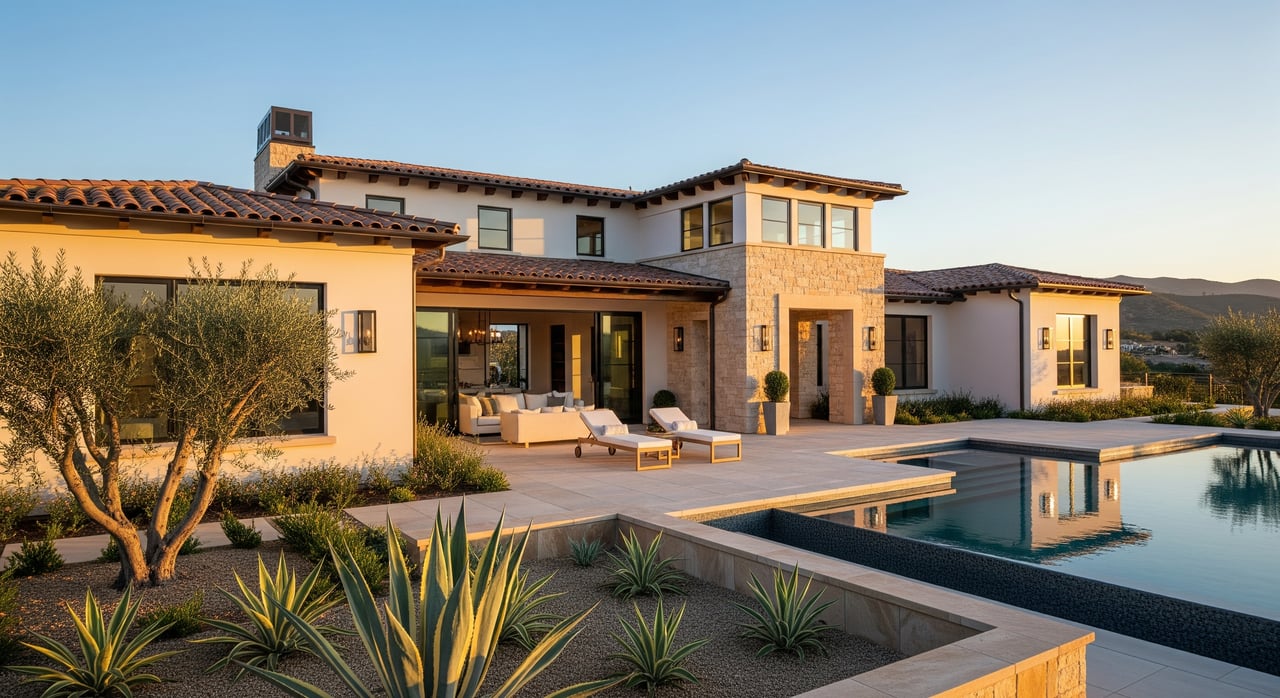
What is your Carmel Valley home really worth right now? In a neighborhood where two similar floor plans can sell very differently based on HOA details, upgrades, or a view, broad city averages will not cut it. You want a precise, data-backed number that reflects how buyers actually behave today. In this guide, you’ll see how a micro-comp valuation works in Carmel Valley, the signals that move price in Q1, and what you can expect from a confidential report. Let’s dive in.
Why micro-comps matter in Carmel Valley
Carmel Valley is a distinct submarket within North County San Diego with a wide mix of single-family homes, townhomes, and planned communities. HOA structures, amenities, trails, shopping, and commute patterns create meaningful price differences within short distances. School boundaries and ratings can shift buyer interest, and new construction or nearby resales can change the playing field quickly.
Because of this, you should rely on micro-comps. A micro-comp is a comparable sale that matches your property’s product type, construction era, and immediate tract or block. This hyper-local approach reduces the noise you see in broader city data and lets you price with confidence.
How your valuation is built
A credible valuation follows a clear process. Here is the framework used for Carmel Valley homes.
Define the micro-market
- Focus on your immediate tract or street and expand only when necessary for sample size.
- Match property type and era: single-family vs. townhome, similar year built, and floor plan when possible.
- Keep buyer context the same: school boundaries, HOA status and fee range, and typical commute corridors.
Select high-quality micro-comps
- Start with closed sales from the last 3 to 6 months. Expand to 6 to 12 months only if the market is thin.
- Prioritize comps within plus or minus 5 to 10 percent of your living area with the same bed and bath count or well-supported adjustments.
- Consider lot size, topography, view, and condition. Keep HOA fees and amenities comparable.
- Use pending and active listings to gauge buyer sentiment, not as proof of value. Look at days on market and price changes for these.
Normalize the numbers
A price-per-square-foot baseline creates an apples-to-apples starting point.
- Compute the median or mean price per square foot from closed micro-comps and remove outliers.
- Establish a baseline estimate by multiplying your home’s square footage by that metric.
- Then refine with specific feature adjustments.
Simple formula you will see in the report:
- Adjusted Comp Price = Sold Price + Sum(Feature Adjustments)
- Feature Adjustment = (Local per-unit value) × (difference in units)
When sample size allows, a basic regression across the local comp set can estimate the value of features like bedrooms, baths, age, lot size, garage spaces, pool, view, and HOA fee. This adds statistical rigor to the qualitative comparison.
Adjust for condition and features
Condition has a major impact in Carmel Valley, where many homes have selective remodels.
- Use a clear condition scale, such as 1 to 5. Align your home to comps with similar levels.
- Place emphasis on kitchen and bath updates, flooring, windows, roof and HVAC age, and outdoor living quality.
- Verify permits for additions or major remodels. Permitted work typically carries more value and smoother appraisal acceptance.
- Price view, lot usability, and energy-efficiency upgrades with support from nearby sales that isolate those features.
Fold in buyer-demand signals
Beyond features, buyer behavior affects price. Your valuation will integrate:
- Days on Market trends. Falling DOM supports more assertive pricing.
- Sale-to-list price ratio. Above 100 percent suggests competitive bidding.
- Months of inventory. Low inventory points to a seller’s market and tighter price bands.
- Offer activity and concessions. Multiple offers or waived contingencies in comps indicate a strong backdrop.
- Frequency and timing of price reductions in active listings. This flags price sensitivity.
- Early digital traction for actives and pendings. Views, saves, and tour requests signal real-time demand.
The result is a value range, plus a recommended list price position based on whether the market is heating or cooling.
A quick example of the math
Here is a simplified, reproducible approach you will see reflected in your report:
Establish a price-per-square-foot baseline from 3 to 6 closed micro-comps that match your product type.
Multiply the baseline by your home’s square footage to create an initial estimate.
Adjust for meaningful differences: bedrooms, bathrooms, lot size, pool, view, HOA fees and amenities, and overall condition. Use per-feature dollar or percentage adjustments derived from local sales.
Cross-check against current actives and pendings and adjust your recommended list position up or down based on DOM trends, sale-to-list ratios, and months of inventory.
What moves price in Q1
Early year momentum often builds into spring. If DOM is contracting and sale-to-list ratios are firming, you can position near the upper end of the value range. If months of inventory are rising and price reductions are common, aim closer to the midpoint to drive activity quickly.
A simple decision rule used in the report:
- If sale-to-list ratio is above 1.00 and DOM is decreasing, list near the upper band.
- If months of inventory is rising and reductions are frequent, choose a conservative list price closer to the midpoint.
Your confidential valuation deliverable
You receive a concise, data-backed package designed to guide decisions without noise.
What you get
- Suggested value range with a clear low, market, and high band, plus rationale.
- Recommended list price and strategy that fits your timing, risk tolerance, and whether you prefer a public or private sale.
- Key comparables and adjustments with transparent explanation of the math.
- Market context including DOM trend, months of inventory, and notable nearby sales.
- Condition notes and prep recommendations with estimated cost-benefit where appropriate.
- Timeline and marketing plan tailored for a Q1 launch or a discreet, off-market approach.
What we need from you
To maximize accuracy and reduce surprises, please share:
- Floor plan or measured drawings
- Recent interior and exterior photos
- A list of improvements with dates and permits
- Receipts or warranties for major systems
- HOA documents, dues, and any known assessments
- Survey or plot map, if available
- Utility and tax bills
- Any inspection or pest reports
Private sale vs. public listing
A private or quiet sale offers discretion but reaches a smaller buyer pool. That often means pricing more conservatively to offset reduced exposure. A hybrid path can work well: discreet outreach through curated buyer networks and broker-to-broker channels, followed by a full public launch if the right result is not achieved quickly.
Your valuation will include pricing guidance for both paths so you can choose the balance of privacy and exposure that fits your goals.
Risks, limitations, and transparency
- Data reliability. Public portals can lag or misstate details. MLS data is the authoritative source for comps, DOM, and list-to-sold metrics.
- Thin-market conditions. When recent local sales are limited, the value range widens. We will call out confidence levels directly in your report.
- Appraisal vs. market value. Lender appraisals emphasize closed comps and conservative adjustments, which can diverge from a market outcome shaped by current buyer demand.
- Permits and disclosures. Unpermitted work can reduce buyer confidence and appraisal acceptance. California sellers must complete required disclosures, and natural hazard factors can influence buyer decisions.
- HOA factors. Dues, special assessments, reserve status, and litigation can affect value. We review what is available and reflect it in pricing.
Next steps
If you want a precise, confidential number for your Carmel Valley home, the path is clear: share a few details, and we will assemble a micro-comp set, verify key features, and deliver a data-backed value range with a pricing plan for Q1. Whether you prefer a private sale or a polished public launch, you will see clear tradeoffs, timelines, and an action plan to maximize your net.
When you are ready, reach out to set up your confidential valuation with Adam Loew. We will handle the analysis and present your options with clarity and discretion.
FAQs
How many comps are used in a Carmel Valley valuation?
- Expect 3 to 6 high-quality closed comps plus several pending and active listings for context; if the micro-market is thin, we expand the time frame or radius and disclose that in the report.
How do you adjust for condition and upgrades in Carmel Valley?
- We match to comps with known conditions and use per-feature adjustments derived from nearby sales; when sample size allows, we add regression-based estimates and prioritize permitted improvements.
How does Q1 timing influence my list price?
- If DOM is falling and sale-to-list ratios are rising, we can price near the upper band; if inventory is building and reductions are common, we recommend a conservative midpoint to spur activity.
Why might an appraised value differ from your market valuation?
- Appraisals rely strictly on closed comps and lender guidelines, while our market valuation incorporates current demand signals and list-price strategy that can influence the final sale price.
How are location-specific features like views or proximity to freeways valued?
- We quantify using comps that isolate the feature; if data is limited, we apply expert judgment supported by local buyer feedback and showings and translate that to a clear dollar or percentage adjustment.