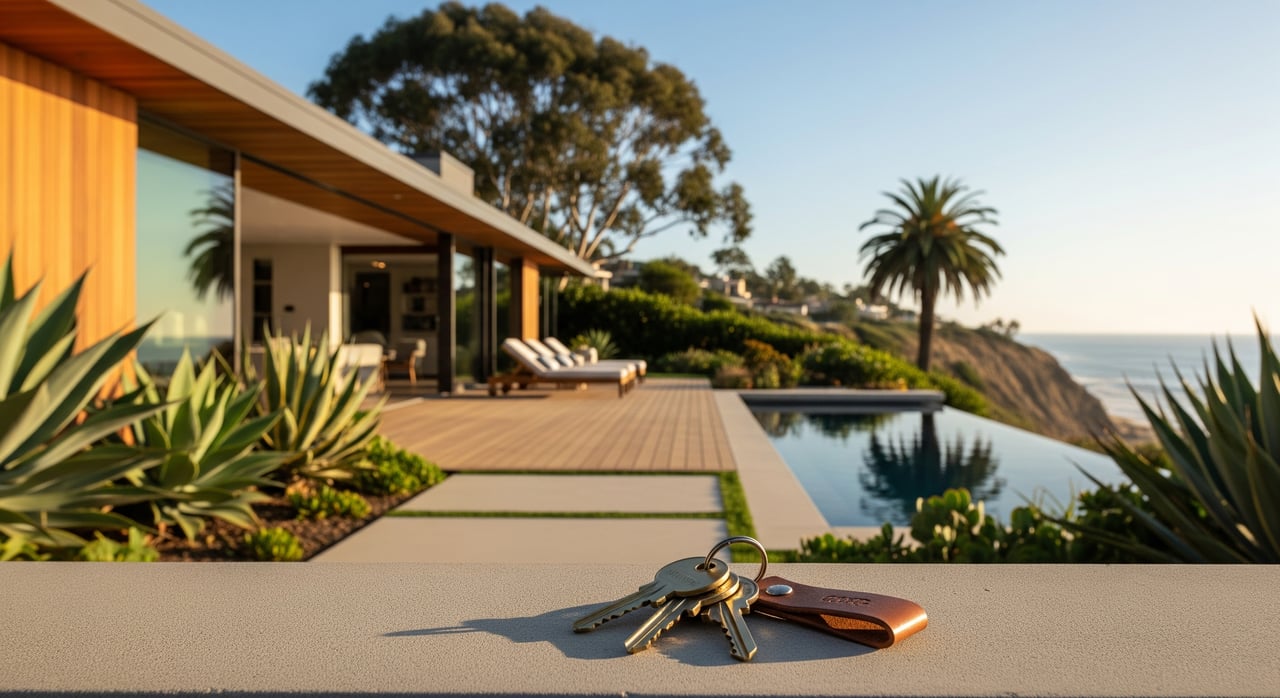
Buying a home in Encinitas is exciting, but the word “escrow” can make the process feel mysterious. You are not alone if you are wondering who handles what, when your deposit is due, or how coastal rules might affect your closing. In this guide, you will learn exactly how escrow works in California, what to expect in Encinitas, and how to move from offer to keys with confidence. Let’s dive in.
What escrow means in California
Escrow is a neutral, third party that holds funds and documents until all contract conditions are met. The escrow officer coordinates with the title company, your lender, and both parties to prepare documents, track deadlines, and handle closing funds.
- Buyer: deposits funds, completes inspections, responds to disclosures, removes contingencies, and signs loan and closing documents.
- Seller: delivers required disclosures, provides agreed repairs or documentation, and signs closing documents.
- Escrow holder: manages the file, holds your deposit, prepares settlement statements, and coordinates recording.
- Title company: runs a title search, issues a preliminary title report, and provides title insurance.
Most Encinitas escrows run about 30 to 45 days. Quick closings can be 17 to 21 days, while luxury or coastal transactions with added due diligence often need 45 to 60+ days.
The Encinitas escrow flow
Once your offer is accepted, the steps are structured and predictable. Here is the big picture:
- Offer accepted and contract signed.
- You deliver earnest money to escrow, usually within the timeline in the contract.
- Escrow opens the file and title issues a preliminary report.
- You schedule inspections, review seller disclosures, apply for your loan, and the lender orders the appraisal.
- You address contingencies such as inspections, loan, appraisal, title, and any HOA or natural hazard disclosures.
- Lender completes underwriting and issues final approval, then funds.
- You do a final walkthrough, escrow records the deed, and keys are released.
Earnest money in Encinitas
Your deposit shows good faith and is held in escrow. In many Southern California coastal communities like Encinitas, a common range is 1 to 3 percent of the purchase price. In very competitive or luxury segments, buyers sometimes offer more to strengthen an offer.
- Timing: Contracts often require delivery within a few business days of acceptance. Wire or cashier’s check are common.
- Safety: To avoid fraud, only follow wiring instructions provided by your escrow officer, and confirm those instructions by phone using a trusted number before sending any funds.
- If a deal cancels: If you cancel under a valid contingency, deposits are typically returned per the contract. If there is a breach, dispute resolution follows the contract’s mediation or arbitration terms.
Key contingencies and timelines
Contingencies protect you while you complete due diligence. Timelines are negotiable, but these ranges are common in our market.
Inspection contingency
- Purpose: Identify defects and negotiate repairs or credits.
- Typical period: 7 to 17 calendar days.
- Tip: Schedule your general inspection, termite or WDO, and any specialists immediately after opening escrow.
Loan and appraisal contingencies
- Purpose: Ensure you can obtain financing and that the home appraises for the loan.
- Typical period: 17 to 24 days, often aligned. Jumbo or complex loans may need more time.
- If appraisal is low: You may negotiate with the seller or increase your down payment.
Title and disclosure review
- Title: Review the preliminary title report and ask for clarification on liens, easements, or exceptions.
- HOA and CC&Rs: For condos or planned developments, plan 10 to 15 days to review budgets, rules, and meeting minutes.
- Statutory disclosures: Review the Transfer Disclosure Statement, Natural Hazard Disclosure, and any lead-based paint disclosure for pre-1978 homes.
Disclosures unique to California and the coast
State-required disclosures
Sellers must provide the Transfer Disclosure Statement and the Natural Hazard Disclosure, plus federal lead-based paint disclosure for older homes. California Civil Code outlines these requirements and buyer rights to review and, in some cases, rescind.
Coastal and Encinitas considerations
Many Encinitas properties are in or near the California Coastal Zone. You should confirm permit history and any recorded notices.
- Coastal Development Permit (CDP): Request copies for substantial development.
- Shoreline and bluff items: Ask for permits related to seawalls, revetments, or bluff stabilization. Review any known bluff erosion or slope stability disclosures.
- Recorded restrictions: Title reports may show easements, coastal access rights, or notices about coastal hazards.
- Sea-level rise and erosion: Review local hazard maps and planning studies if you are purchasing near bluffs or the shoreline.
Coastal property permits and reports to verify
If you are pursuing a bluff-top or near-bluff home, allow extra time and specialists.
- Permit verification: CDPs, building permits for additions and decks, and approvals for any shoreline armoring or bluff work.
- Recommended reports: A geotechnical or bluff stability report, structural review of shoreline structures, and flood or erosion risk assessments.
- Lender and insurance: Some lenders require additional documentation for coastal properties. Insurance availability and premiums can be affected by flood or erosion risk, so contact your insurer early.
Example timelines you can use
Standard 30-day escrow
- Day 0: Offer accepted, deposit due per contract.
- Days 1 to 3: Escrow opens, preliminary title ordered, inspections scheduled.
- Days 3 to 10: General, termite, and specialty inspections. Review disclosures.
- Days 7 to 17: Inspection contingency window. Negotiate repairs or credits.
- Days 3 to 21: Loan application in process. Appraisal ordered and completed.
- Days 21 to 25: Appraisal in, underwriting advances.
- Days 25 to 28: Remove remaining contingencies. Escrow prepares closing docs.
- Day 29: Final walkthrough and document signing.
- Day 30: Funds wired, deed recorded, keys delivered.
45-day coastal escrow
- Day 0: Contract executed, deposit in escrow.
- Days 1 to 5: Escrow opens. Order geotechnical and specialty inspections if near bluffs.
- Days 5 to 20: Inspections and geotech completed. Negotiate any remediation.
- Days 10 to 30: Lender underwriting and appraisal. Address title exceptions or recorded coastal notices.
- Days 30 to 40: Final repairs or permit follow-up. Finish HOA review. Remove contingencies.
- Days 41 to 45: Final walkthrough, funding, recording, and closing.
What can delay escrow
A smooth close depends on early organization and clear communication. Common issues include:
- Missing disclosures or permit records from the seller. Ask for everything early.
- Title exceptions or undisclosed liens. Review the preliminary title report right away and request clarification from the title officer.
- Slow underwriting or appraisal delays. Submit loan documents promptly and choose a lender experienced with coastal property.
- HOA document delays. Get HOA manager contacts early and allow extra time for delivery.
- Wire fraud risk. Confirm all wiring instructions by phone with your escrow officer before sending funds.
Who pays for what
Most fees are negotiable and set by the contract. Local customs can vary by neighborhood and market.
- Escrow fees: Often split between buyer and seller.
- Title insurance: In much of Southern California, sellers commonly pay for the buyer’s owner’s title policy, but this can be negotiated.
- Transfer taxes, recording, and prorations: Allocated in the contract. Escrow provides a final settlement statement with exact amounts.
- Repairs: Negotiated during the inspection period. You can request repairs, a credit, or a price change.
Encinitas buyer checklist
Before you offer
- Get preapproved with a lender familiar with San Diego coastal loans.
- Decide on an escrow length and an earnest money strategy that fits your comfort level and goals.
Right after acceptance
- Deliver your deposit on time and get written confirmation from escrow.
- Schedule general and termite inspections. Add geotechnical review if near bluffs.
- Review the Transfer Disclosure Statement, Natural Hazard Disclosure, and permit history immediately.
- Read the preliminary title report and ask questions about liens, easements, or restrictions.
- If there is an HOA, review budgets, CC&Rs, and meeting minutes as soon as they arrive.
- Contact your insurance agent early for homeowners and, if applicable, flood or earthquake quotes.
- Confirm wiring instructions by phone with your escrow officer before sending funds.
Final steps
- Do a final walkthrough 24 to 48 hours before funding to verify condition and agreed repairs.
- Review closing funds and prorations with escrow in writing.
- Keep open communication with your agent, lender, and escrow officer to prevent last-minute surprises.
Ready for a smooth close in Encinitas?
Escrow does not have to be stressful. With clear steps, early due diligence, and local guidance, you can protect your interests and close on time, even on complex coastal properties. If you want a concierge approach that anticipates issues and keeps your move on schedule, connect with Adam Loew for expert buyer representation in Encinitas and across North County.
FAQs
What is escrow in a California home purchase?
- Escrow is a neutral third party that holds funds and documents, tracks deadlines, and coordinates recording once all contract conditions are met.
How much earnest money is typical in Encinitas?
- A common range is 1 to 3 percent of the purchase price, with higher amounts sometimes used to strengthen offers in competitive or luxury segments.
How long does escrow usually take in Encinitas?
- Many closings take 30 to 45 days. Quick closings can be 17 to 21 days, and coastal or complex transactions may require 45 to 60+ days.
What contingencies should I expect as a buyer?
- Most buyers plan for inspection, loan, appraisal, title, HOA document review if applicable, and review of statutory disclosures like the Natural Hazard Disclosure and Transfer Disclosure Statement.
What extra steps apply to bluff-top or near-shore homes?
- Verify Coastal Development Permits and any shoreline or bluff stabilization approvals, obtain a geotechnical report, and review title for recorded coastal notices or easements. Lenders and insurers may require added documentation.